Foods You Should Try While in Kyoto (and Japan in general)
So, you’re planning a trip to Japan, and you’re trying to figure out some must eat items while you’re here, because you don’t just wanna wing it and end up with analysis paralysis. (I live here, and I still wander into areas and have no idea what spot I should try eating at.) This is especially true if you don’t understand the language. You could be wondering what separates the good spots and bad, and with AI scraping and barfing out all the reviews in the world, people doing review trading, or spots just offering customers free food for 5-star reviews, you can’t even really fully trust review sites to give you real opinions anymore.
I’m gonna take a step back and instead of recommending certain restaurants, I’m gonna recommend that you try particular food items. These will be things that you won’t be able to find in most Western countries, but should appeal to the Western palate enough that even eaters that wouldn’t describe their tastes as “adventurous” would be able to enjoy.
Gyukatsu
We’ll start with some of the Kyoto area foods first. Katsu is typically made with chicken or pork. But, why not beef? If you buy the story that modern food historians are peddling, the Eastern area of Japan had a bigger beef-producing culture, therefore beef was cheaper, and thus gyukatsu was the predominant form of katsu. In the Kanto area where Tokyo is, pork was cheaper, that’s what people decided to fry up.
Whether or not this story is accurate, we’ll probably never know, but it seems pretty established that Kansai is where gyukatsu took root. Might as well try it in the area that made it work, right? Unlike pork katsu, gyukatsu is served medium rare, and most of the spots I’ve been to provide you with a cooking apparatus to get your beef to the desired level of doneness. Pork katsu is crunchy, meaty, and in my opinion, best with additional sauce. Gyukatsu on the other hand is a balance of crunch, buttery richness, and is best with a hit of salt. If you’re not vegan, vegetarian, or a non-beef consumer, I definitely recommend finding a gyukatsu restaurant for one of your meals in Kyoto.
Kushiage (kushikatsu)
Along with gyukatsu, I’ve never seen a kushikatsu place in America. Personally, I’d think you’d be missing out if you didn’t try both of these cuisines while you were in the Kansai area, though, if you only have 1 or 2 days here, that might be overdoing it on the fried foods.
Kushi is the Japanese word for the skewers that they use for kushiage/kushikatsu. Basically, think of all the delicious skewers you get at an izakaya. Charcoal-grilled chicken, cuts of pork, veggies… now imagine all those things have been battered and fried, and now you’ve got kushikatsu. A helpful tip is to only order one type of thing at a time, or ask a patient server to explain what all the things are, because it’s kinda tough to tell some things apart after they’ve been battered and fried.
If you REALLY want to frymaxxx during your vacation, they have all-you-can-eat kushikatsu places like Kushiya Monogatari in Kyoto where you batter and fry everything yourself with the hot oil receptacle right at your table. If they opened a spot like this in America, it would be hit with a lawsuit before the first guests even finished their meal, so if this sounds like it’d be up your alley, definitely try it here.
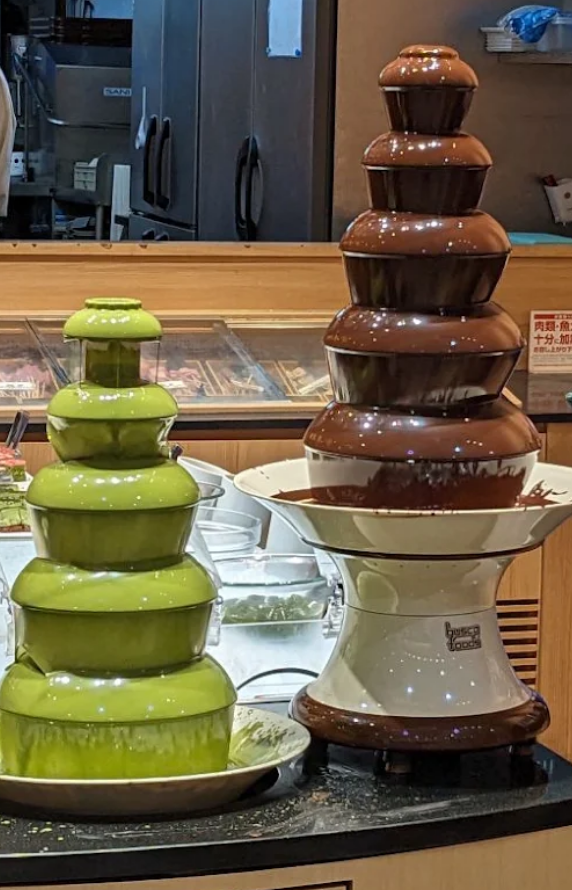
These aren’t the main attraction, but they certainly get attention.
Convenience Store Fried Chicken
Now we’re into the general recommendations for stuff. Conbini karaage has sort of risen to a mythical level and it’s probably not going to be as great as you’re expecting, but it’s also better than any convenience store food I’ve had outside of Japan. (Except for maybe a couple items at Buc-ee’s....)
Whether you hit up Lawson, Family Mart, or 7-11, it’s all fairly close, and it’s all reasonably good for a decent price. Fun fact, at some point during the 70’s, some crazy exec at KFC Japan had the wild idea to sell KFC as a Christmas dinner, and it is now SO popular at Christmas time that the KFC Christmas meal sells out pretty much every year, and you have to order it ahead of time. But it goes beyond that. The conbini all sell their own version of a Christmas chicken meal and you ALSO have to pre-order those.
Monaka
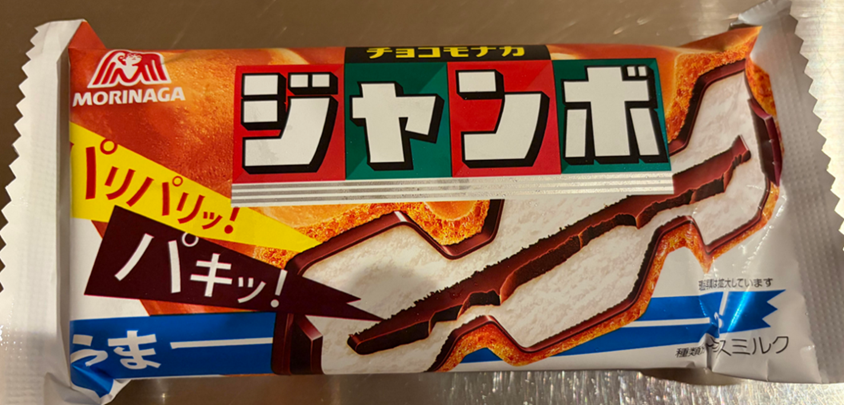
With its crispy outer layer, and pleasantly cool and soft ice cream layer, Morinaga’s Monaka basically put the tired ice cream sandwich out to pasture. It’s in a wafer shell, so you’re able to just straight up eat it without it getting all over your hands, and if you get the choco version, there’s layers of chocolate shell in between which heightens the satisfying textural changes. Haagen-Dazs sells a version of this called the “Crispy Sandwich”, an oval-shaped puck of ice cream, coated in a crunchy chocolate or white chocolate shell sandwiched between two thin wafer cookies. Basically any version of this is good, provided you haven’t gotten an unlucky one where it warmed up and the wafers got limp. (Yeah, that’s a thing that happens sometimes…)
Fruit
I’m not gonna tell you to go out and buy the insanely-priced mangoes and strawberries and watermelons, but there are a couple fruit varieties here that are quite special. If you get Shine Muscats while they’re in season, you can enjoy some of the tastiest grapes you’ve ever had. There are several different varieties of apple that I’ve found to be quite outstanding, even red-fleshed apples like the Kurenai no Yume. If you go to a grocery store that prides itself on its fruit, it’ll give you an average degrees Brix (°Bx) of the fruit that’ll let you know the fruit’s sugar content by weight. These will all be more expensive, but around 50-100% higher than average varieties, not stupidly expensive like 50-100x. (Also, for the record, I did try one of the expensive cantaloupes, aka “Yubari melon”, in Sapporo. It was about 1200 yen for maybe 1/6 of one. Not even usually a fan of cantaloupe, and that was the best I’d ever had.)
Gummy Snacks
You might be wondering how different gummy snacks could be. I mean, your standard grocery store in the west is gonna have gummy bears, gummy cherries, peach rings, what else could they possibly do? A lot, apparently. Tsubu Gummy are jelly beans that have really good flavors, but the “jelly” part is a tougher, chewy gummy. I really like the premium Mango flavors. There’s also Tough Gummy, which is a gummy treat that’s very, very tough to chew through. Kazitte! is in that same vein. There’s also a variety of Ninja Meishi that are kind of like a chiclet, but instead of chewing gum being encased in a candy shell, it’s a tough gummy.
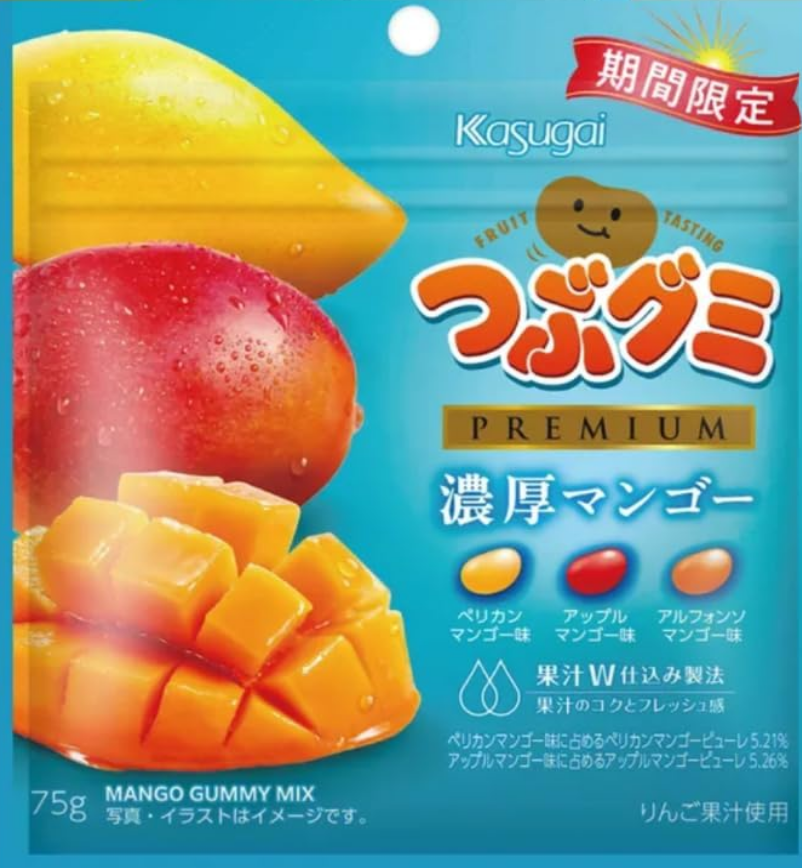
S-tier snacking, imo
If you weave one or two of these culinary treats into your trip, it’ll definitely give you a different perspective on the food scene here versus just gorging on higher quality steak and sushi. Who knows, you might just end up discovering a new favorite food or two.